Key Takeaways
- A purpose-built laboratory fridge is essential for sample integrity: Unlike domestic units, a lab fridge maintains a tightly controlled 2°C to 10°C range with forced-air (fan-forced) circulation, protecting vaccines, biological samples, reagents, biological specimens, and pharmaceuticals from temperature drift.
- Compliance and traceability are built in: Thermoline's premium laboratory refrigerators range is TGA approved and registered in the ARTG (299160) as a Class I medical device, with digital data loggers (DDL) and battery-backed high/low temperature alarms that satisfy the highest standards for audit and accreditation.
- The right format protects workflow as well as samples: From underbench laboratory fridge models for compact clinical labs to bio refrigerators, double and triple door upright fridges, and laboratory freezers, choosing the correct configuration ensures proper storage of temperature sensitive materials.
- Australian-made quality delivers reliability and security: Thermoline laboratory fridges are designed, engineered, and built in Western Sydney with energy-efficient components, lockable interiors, BMS connectivity, and a full two-year warranty backed by local service.
A laboratory fridge sits quietly in the corner of almost every lab, pharmacy, hospital, and research facility in Australia. It rarely gets the attention it deserves, yet the work happening inside it is mission-critical. Vaccines lose potency, reagents degrade, blood products spoil, and entire research programs can be set back when cold storage fails. Choosing and using the right laboratory fridge is not a minor purchasing decision. It is the difference between reliable results and costly setbacks.
With over 50 years of experience designing and manufacturing temperature-controlled laboratory refrigerators and laboratory freezers from our factory in Western Sydney, Thermoline Scientific has seen first-hand how the right cold storage transforms the way a facility operates. This article unpacks why a purpose-built laboratory fridge matters, what to look for, and how it underpins the quality of everything you do.
Why a Laboratory Fridge Is Not Just Another Fridge
It is tempting to assume that any refrigerator capable of holding 4°C will do the job. In practice, a laboratory fridge is engineered to a completely different standard than a kitchen or retail unit. The difference shows up in four critical areas.
The first is temperature uniformity. A domestic fridge can have temperature variations of 5°C or more between the top shelf and the crisper drawer. That kind of swing is acceptable for groceries, but it would destroy a vial of insulin or compromise an ELISA kit.
A laboratory fridge uses forced-air (fan-forced) circulation to keep every shelf within a tight tolerance, typically holding the cabinet between 2°C and 10°C with minimal variation. Microprocessor temperature controllers maintain a stable temperature range, typically calibrated between +2°C and +8°C for biological preservation, and the setpoint is displayed on a clear digital display.
The second is rapid open-door recovery. Every time a door opens, warm air enters the cabinet. Domestic fridges can take 15 minutes or longer to return to setpoint. A purpose-built laboratory fridge is designed to recover within minutes, limiting the time samples spend outside their target range. For facilities that open the fridge dozens of times a day, this matters enormously.
The third is monitoring and protection. A laboratory fridge includes a digital display with continuous logging via integrated digital data loggers (DDL), which record real-time temperatures at consistent intervals to ensure a complete historical record of temperature conditions.
High and low temperature alarms with audible and visual indicators, plus voltage-free contacts that allow connection to a Building Management System (BMS), keep the unit observable around the clock. Independent, battery-backed alarms are essential to alert users of power failures, high/low temperatures, and door-ajar conditions, even when the building is empty. A domestic fridge simply warms up.
The fourth is safety. Many laboratory refrigerators are equipped with advanced safety and monitoring systems to ensure compliance with industry standards for the storage of sensitive materials. For facilities working with volatile solvents or flammable reagents, explosion-proof or spark-free interiors are required in refrigerators storing volatile or flammable materials to ensure lab safety.
Secure access locking mechanisms are necessary for laboratory refrigerators to safeguard high-value reagents and materials from unauthorised access or tampering, which is why every Thermoline laboratory fridge is supplied as standard with key-locked doors.
What's at Stake When Cold Storage Fails
The consequences of inadequate cold storage are rarely abstract. A failed vaccine fridge can result in thousands of dollars of stock being written off and patients needing to be recalled for revaccination. A spike in a reagent fridge can invalidate weeks of experimental work. In a pathology lab, an unstable laboratory fridge can lead to delayed diagnoses and clinical risk.
Regulatory bodies have responded to these risks with strict standards. Vaccines stored in Australian pharmacies and medical clinics must comply with the National Vaccine Storage Guidelines (Strive for 5), which require purpose-built fridges with continuous data logging and minimum and maximum temperature monitoring.
Pathology and biomedical labs operating under NATA accreditation are expected to demonstrate that their cold storage is fit for purpose and continuously monitored. A laboratory fridge that meets these highest standards removes a significant compliance burden from facility managers and quality officers.
Types of Laboratory Fridges and Laboratory Freezers
Different settings place different demands on cold storage. Understanding which type of unit is suitable for your work is the first step in selecting the right equipment.
Laboratory refrigerators maintain temperatures between 2°C and 10°C for daily, short-term storage, while ultra-low temperature (ULT) laboratory freezers operate between -40°C and -86°C for long-term preservation. Standard laboratory refrigerators are engineered for short-term cooling to prevent immediate spoilage, while ULT freezers achieve deep cold storage to halt molecular degradation, making them essential for DNA, RNA, and tissue archives. Bio refrigerators, also known as biomedical refrigerators, are specifically designed for storing biological samples like vaccines and blood products, maintaining temperature consistency and providing features like alarm systems for safety.
Pharmacies and Vaccine Storage
Community and hospital pharmacies rely on vaccine refrigerators that hold a steady 2°C to 8°C, the range required for the vast majority of routine immunisations. Features like solid doors with key locks, audible door-ajar alarms, and battery-backed temperature logging are standard for this application. Thermoline's pharmacy vaccine refrigerators are designed specifically to meet the Strive for 5 guidelines and are widely used across Australian pharmacy networks.
Pathology and Clinical Laboratories
Pathology labs use a laboratory fridge to store reagents, controls, calibrators, and patient samples that have not yet been processed. Quick access during peak processing times is essential, so units in this environment are often chosen for their fast recovery and digital display visibility. Glass-door models can be useful where staff need to identify contents quickly, while solid-door models offer better thermal performance for sensitive reagents.
Blood Bank and Transfusion Services
Blood storage demands the highest level of control. A blood bank laboratory fridge typically operates at 4°C plus or minus 1°C, with redundant alarms, mandatory chart recorders or electronic data loggers, and continuous monitoring. Thermoline's dedicated blood storage refrigerators are engineered to meet the requirements of transfusion services, including audible alarms, key-locked doors, and BMS connectivity for after-hours oversight.
Research and University Laboratories
Research labs typically use a general-purpose laboratory fridge to store buffers, antibodies, cell culture media, and chemical solutions. Capacity, ease of cleaning, and adjustable shelving are top priorities here, as research teams frequently reorganise inventory as projects change. Thermoline offers double and triple door upright laboratory fridge configurations and matching laboratory freezers for high-volume research environments where storage demand is constantly growing.
Veterinary and Animal Health
Veterinary clinics use a laboratory fridge to store vaccines, biologics, and sensitive medications for both companion and large animals. The same principles apply as in human pharmacy: tight temperature control, continuous logging, and alarm monitoring are essential to protect the cold chain and to satisfy regulatory requirements.
Features That Define a Quality Laboratory Fridge
When evaluating any laboratory fridge for your facility, the following features separate dependable, compliant units from those that will cause problems down the track. Key features to evaluate in laboratory refrigerators include microprocessor temperature controllers, forced-air circulation, rapid open-door recovery, digital data loggers, and comprehensive failure alarms.
Precise Temperature Control
Look for a microprocessor temperature controller with a digital display that shows current cabinet temperature to at least one decimal place. The setpoint should be adjustable across the working range, and the controller should record minimum and maximum temperatures over time. Forced-air (fan-forced) circulation is non-negotiable for uniformity across all shelves and ensures that every product on every shelf experiences the same controlled environment.
Continuous Data Logging
Modern compliance frameworks expect a complete temperature record. A laboratory fridge with integrated digital data loggers (DDL) removes the need for separate dataloggers and simplifies audit preparation. Logs should be downloadable for record-keeping and exception reporting, and made available to compliance officers on request.
Comprehensive Alarm Systems
Audible and visual alarms for high temperature, low temperature, door ajar, power failure, and sensor errors are the baseline. Independent, battery-backed alarms ensure the unit can still alert staff during a blackout. Voltage-free contacts allow connection to a BMS or external monitoring service, which is invaluable for facilities that store high-value or irreplaceable stock outside business hours.
Automatic Defrost
Automatic defrost systems in laboratory refrigerators help reduce manual maintenance and ensure optimal cooling efficiency. By cycling the evaporator on a controlled schedule, an auto-defrost unit avoids the ice build-up that compromises airflow and temperature stability, freeing staff from a manual housekeeping task that is easy to forget.
Solid or Glass Door Options
The right door depends on the application. Solid doors offer superior thermal performance and are preferred for vaccines, reagents, and biologics where minimising temperature fluctuation is paramount. Glass doors improve visibility and reduce unnecessary door openings in busy clinical or research areas where staff need to scan inventory at a glance.
Explosion-Proof or Spark-Free Interiors
Where labs store volatile or flammable reagents and solvents, explosion-proof or spark-free interiors are required to ensure lab safety. These units replace standard interior light fittings, fans, and electrical components with sealed or intrinsically safe alternatives so that an ignition source cannot develop inside the cabinet.
Adjustable, Removable Shelving
A laboratory fridge should adapt to the work it serves. Adjustable, removable shelves allow you to store everything from small vials to large flasks and bulky media bottles. Drawer accessories can help organise small items and protect them from being knocked around during access.
Lockable Cabinets and Interior Security
Key-locked doors protect controlled substances, irreplaceable samples, and proprietary materials. Secure access locking mechanisms and lockable interior compartments are necessary to safeguard high-value reagents and materials from unauthorised access or tampering, and are a regulatory requirement in many shared lab and pharmacy environments.
Energy Efficiency
A laboratory fridge runs 24 hours a day, every day of the year. Energy-efficient compressors, foam insulation, and modern refrigerants such as R600a make a meaningful difference to running costs over the unit's lifespan, particularly in Australian conditions where ambient heat increases compressor workload.
Sizes and Configurations for Every Workspace
Thermoline manufactures laboratory fridge models in a range of sizes and configurations to suit every workspace, from compact clinical settings through to high-volume research and biomedical facilities. The choice typically comes down to four formats.
An underbench laboratory freezer or fridge slides neatly beneath standard 850 mm to 900 mm worktops, keeping samples within arm's reach without consuming valuable bench space. These units are ideal for satellite storage at the point of care, quality control benches, or compact pharmacy dispensaries.
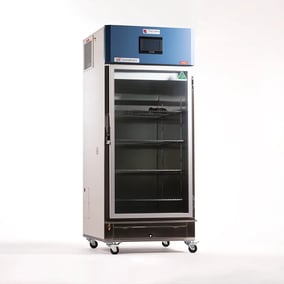
Single-door upright laboratory fridge models offer a familiar, vertical format with strong capacity in a small footprint. They suit pharmacies, clinics, and general lab use where moderate volume and quick access matter equally.
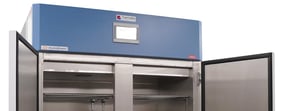
Double and triple door upright laboratory fridge configurations dramatically increase capacity for research labs, pathology services, and pharmaceutical facilities that store large quantities of reagents, vaccines, or biological materials. Dividing the cabinet into multiple compartments also reduces temperature loss when only one door is opened.
Free-standing chest-style and specialist units round out the range, providing options for blood banks, biorepositories, and any facility with specialised cold-storage needs. For ultra-deep preservation, our matching laboratory freezers and ULT freezers extend coverage from 2°C all the way down to -86°C.
Why Australian-Made Matters
Choosing a Thermoline laboratory fridge means choosing equipment that has been designed, engineered, and built in Australia. Our Western Sydney factory has been producing temperature-controlled laboratory equipment for over 50 years, and our premium range is proudly Australian Made. This brings several real advantages to facilities buying a laboratory fridge today.
Local design means our units are engineered to perform in Australian ambient conditions, where peak summer temperatures push refrigeration systems harder than they would be in cooler climates. Local manufacturing means faster lead times and access to spare parts without the delays associated with imported equipment. Local service teams are based here in Australia, ready to provide on-site support, calibration, and technical advice when you need it.
Every Thermoline laboratory fridge is backed by a full two-year warranty, and the premium range is TGA approved and registered in the ARTG (299160) as a Class I medical device. That regulatory standing matters in pharmacy, pathology, and medical settings where evidence of compliance is part of accreditation and audit. It also reflects our commitment to reliability and the highest standards of product quality in every unit we make.
Getting the Most From Your Laboratory Fridge
A well-chosen laboratory fridge will perform reliably for many years, but good practice on the floor makes a noticeable difference to longevity and performance. A few simple habits help any unit work at its best.
Allow adequate clearance around the cabinet so air can circulate around the condenser. Avoid placing the unit next to ovens, autoclaves, or direct sunlight. Keep door openings brief and group access where possible so that staff are not opening the door repeatedly across the day. Calibrate the temperature display annually using a NATA-traceable reference. Document temperature checks even when an automatic data logger is running, as this builds a culture of attentiveness around cold storage.
When the time comes to add capacity or replace ageing equipment, talk to a manufacturer who can advise on the right configuration for your workflow rather than simply selling a stock item. Pricing is available on request and is quoted exclusive of GST.
Talk to the Team at Thermoline
If you are evaluating a new laboratory fridge for your pharmacy, lab, hospital, research facility, or veterinary practice, the Thermoline team is here to help. With over five decades of Australian manufacturing experience, TGA-approved products, BMS-ready connectivity, and a full two-year warranty backed by local service, we have the range and the expertise to match the right unit to your application. Give us a call on (02) 9604 3911 today to discuss your requirements, request a quote, or arrange a visit to our Western Sydney facility.
Laboratory Refrigerators FAQs
How long can samples stay safe inside a laboratory fridge during a power outage?
A modern laboratory fridge with good insulation and a tight door seal will typically hold its temperature for between four and six hours during a power outage, provided the door remains closed. The exact window depends on the cabinet's thermal mass, ambient room temperature, and how full it is, as a well-stocked fridge holds temperature longer than a near-empty one.
For critical applications such as blood storage or vaccine inventory, a generator or uninterruptible power supply tied to the BMS is the safest approach. Thermoline units include voltage-free contacts specifically so that a power failure can trigger an external alert before samples are at risk.
Is it acceptable to store food and lab samples in the same fridge?
Storing food and laboratory samples in the same unit is prohibited under WHS regulations and laboratory accreditation standards across Australia, including NATA requirements. Cross-contamination risks aside, the patterns of access for a staff lunchroom are completely different to those of a sample storage environment, which compromises temperature stability.
A purpose-built laboratory fridge should be reserved exclusively for laboratory or clinical use, and staff food should be stored in a separate domestic unit in a designated break area.
What temperature mapping or qualification should I do when commissioning a new laboratory fridge?
Best practice is to perform a temperature mapping exercise before placing samples in a newly installed unit. This involves placing calibrated dataloggers at multiple points throughout the cabinet, including top, middle, and bottom shelves, front and back, and recording temperatures over a 24 to 72 hour period under empty, partially loaded, and fully loaded conditions.
The exercise verifies uniformity across the cabinet and confirms that the setpoint is correctly calibrated. For TGA-registered medical applications such as vaccine and blood storage, this mapping is often required as part of an Installation Qualification (IQ) and Operational Qualification (OQ) process.
Can a laboratory fridge be installed on a wheeled trolley or relocated mid-life?
Some Thermoline laboratory fridge models are supplied with castors, making them straightforward to reposition within a facility for cleaning, room reconfiguration, or to follow a moving program. However, frequent relocation is not recommended for any refrigeration equipment because the compressor and refrigerant lines benefit from settling in a fixed position.
If a unit must be moved, allow it to stand upright for at least 24 hours before switching it back on so that any disturbed refrigerant can return to the compressor. Always verify temperature performance after relocation before returning samples to the cabinet.
How does ambient room temperature affect laboratory fridge performance?
A laboratory fridge is typically rated to perform in ambient temperatures of around 10°C to 32°C. In warmer or poorly ventilated rooms, the compressor has to work harder to maintain setpoint, which increases energy consumption and shortens compressor lifespan. For Australian facilities, this is particularly relevant in regional pharmacies and labs without dedicated air conditioning.
Where possible, install the unit in a climate-controlled area, ensure at least 100 mm of clearance behind and above the cabinet for airflow, and avoid placing it adjacent to heat-emitting equipment such as autoclaves, drying ovens, or large incubators.
What is the difference between a laboratory fridge and a pharmacy or vaccine fridge?
A general-purpose laboratory fridge is designed for broad use across reagents, samples, and biological materials, with a typical operating range of 2°C to 10°C. A pharmacy or vaccine fridge is a specialised variant of a laboratory fridge engineered specifically to comply with the National Vaccine Storage Guidelines, with stricter alarms, mandatory data logging, and features such as door-ajar warnings to protect vaccines from temperature excursions.
All Thermoline pharmacy vaccine refrigerators meet these stricter requirements, while the general laboratory range offers more flexibility for non-vaccine applications.