Key Takeaways
- Start with temperature: Laboratory freezers run anywhere from -10°C to -86°C, and the range you actually need determines the refrigeration design, the price and the running costs of every unit on your shortlist.
- Match the form factor to the room: Underbench, upright and chest laboratory freezers each suit a different combination of available space, storage volume and how often you open the door.
- Safeguards matter more than capacity: Multi-point alarms, battery backup, key-locked, solid doors and remote monitoring are what stand between a component fault and an irreplaceable sample collection.
- Australian-made pays off across the life of the unit: Local manufacture means local service, local spare parts, equipment engineered for Australian ambient conditions, and a full two-year parts and labour warranty.
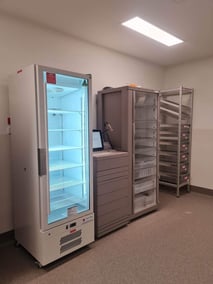
Every laboratory, clinic, university and research facility has its own cold storage problem to solve. The laboratory freezer sitting in the corner of a teaching lab does a very different job to the one preserving high-value cell lines in a pharmaceutical research facility. Choosing the right unit is not simply a purchasing decision. It directly affects sample viability, workflow efficiency and long-term operating costs.
With over 50 years of experience designing and manufacturing temperature-controlled laboratory equipment from our factory in Western Sydney, Thermoline Scientific understands that no two labs are the same. This guide walks through the four decisions that matter most, temperature range, form factor, protective features and capacity, so you can select a laboratory freezer that fits your sensitive samples, your space and your budget.
Start With the Laboratory Freezer Temperature Range You Need
The first question to answer is the simplest one. How cold do you need to go?
Laboratory freezers fall into three broad temperature bands, and each band represents a genuinely different class of equipment rather than a variation on the same design. Getting this decision right first saves you from paying for refrigeration capacity you will never use, or from discovering months later that your samples are degrading.
-10°C to -30°C: General Purpose Lab Freezers
General purpose lab freezers are the workhorses of routine laboratory storage. They suit reagents, culture media, chemical solutions, enzymes and everyday specimens that need to stay frozen but do not require deep cryogenic conditions.
Within this band there is still a meaningful choice. Economy lab freezers operating between -10°C and -20°C, available from 160 L to 260 L, are a practical and cost-effective option for facilities that need reliable storage without frequent access. Premium laboratory freezers reaching -20°C to -30°C, available from 520 L to 950 L, are built for higher-volume bulk storage and heavy daily use in busy departments.
-30°C to -60°C: Biomedical Freezers
A biomedical freezer occupies the middle ground between general purpose and ultra low temperature storage. Rated to -60°C, these units suit temperature-sensitive materials such as plasma, certain biological samples, and long-term sample archives where -80°C is more than the application requires. Hospitals, pathology services and research institutions often specify a -60°C chest freezer for exactly this reason, with capacities from 138 L to 388 L covering most departmental needs.
-40°C to -86°C: Ultra Low Temperature Freezers
An ultra low temperature freezer, commonly called a ULT freezer or simply a -80 freezer, is essential for preserving DNA, RNA, proteins, vaccines, pharmaceuticals and tissue specimens. At ultra low temperatures enzymatic and microbial activity effectively stops, protecting sample integrity over months or even years.
If your work involves biomedical research, clinical trials, veterinary science, vaccine storage or pharmaceutical development, a ULT or pharmaceutical freezer is a requirement rather than an upgrade. Thermoline ULT models hold anywhere between -40°C and -86°C in 1°C increments, so you can set the unit to the exact temperature your protocol calls for.
Laboratory Freezer Types and Form Factors
Once you have settled on a temperature range, the next decision is physical format. Laboratory freezers come in three main configurations, and the right one depends on your available floor space, the volume of samples you need to store and how frequently you access them.
Underbench Laboratory Freezers
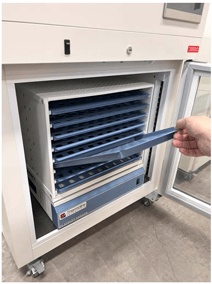
An underbench laboratory freezer, sometimes listed as an undercounter or under bench freezer, is purpose-built for labs where every square metre of bench space counts. Most underbench units measure between 800 mm and 870 mm high and roughly 600 mm to 770 mm wide, allowing them to sit neatly beneath standard 850 to 900 mm laboratory benching. That keeps floor space clear for equipment, trolleys and foot traffic.
A smaller footprint does not have to mean compromised performance. Thermoline’s ultra low temperature underbench freezer holds -86°C in a 100 L cabinet while consuming only 5.5 kWh per day and running at 46.8 dB(A), making it one of the quietest ULT units in its class. Where a single cabinet is not enough, two underbench freezers can be stacked one atop the other to double capacity without expanding the footprint.
These units are also ergonomically sensible. Samples sit at waist height rather than at floor level or above shoulder height, which reduces awkward lifting during routine retrieval. An underbench laboratory freezer is a strong choice for clinical settings, quality control labs, small research teams and any workspace where bench-side access to frozen samples improves the workflow.
Upright Laboratory Freezers
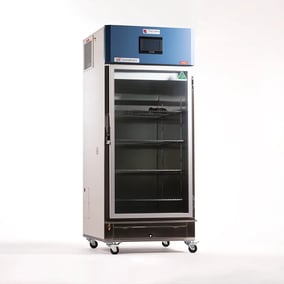
An upright laboratory freezer offers a familiar vertical design that makes it easy to organise samples across multiple shelves and compartments. Uprights work naturally with standard freezer racks, drawers and inventory boxes, so they suit facilities storing a wide variety of sample types that need quick visual access to inventory.
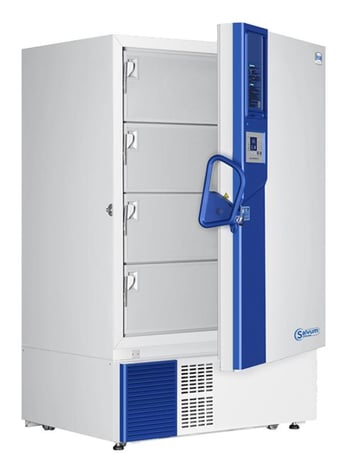
Thermoline’s ultra low temperature upright freezers range from 338 L to 959 L and use TwinCool dual refrigeration. Two independent systems each maintain -80°C on their own, providing a built-in safety net if one system needs service. The cabinet pulls down to -80°C in roughly three hours at 25°C ambient and recovers quickly after door openings, minimising the time stored materials spend above their target temperature. Vacuum insulated panels and four separately insulated inner doors keep that recovery fast and the energy draw low.
Chest Laboratory Freezers
A laboratory chest freezer excels at maintaining uniform temperatures across large storage volumes. Because cold air naturally settles downward, chest-style units experience far less temperature fluctuation when the lid is opened, which makes them well suited to long-term archival storage that is accessed infrequently.
Thermoline offers both -60°C biomedical chest freezers from 138 L to 388 L and -80°C ULT chest freezers from 100 L to 420 L, giving facilities the flexibility to match cold storage to the precise demands of their work.
Features That Protect Your Samples
A laboratory freezer is only as good as the safeguards built into it. When comparing units, look past the headline temperature and capacity figures to the following.
Alarm Systems and Security
Comprehensive alarms are the single most important protective feature in any laboratory freezer. Look for units that monitor high and low temperature, power failure, door ajar events, sensor errors, high and low voltage, high ambient conditions and condenser performance.
Audible buzzers, visual alerts and battery-backed alarms that run for more than 24 hours ensure you are notified of a problem even during an extended outage, which gives you time to act before samples are compromised. Key-locked doors and provision for additional padlocks help maintain access control in shared laboratory environments.
Energy Efficiency and Running Costs
A laboratory freezer runs 24 hours a day, 365 days a year, so efficiency has a real effect on your operating budget. Hydrocarbon refrigerants such as R600a and R290, high-density foam or vacuum insulated panels, multi-layered door seals and insulated inner doors all reduce energy consumption meaningfully. Ambient temperature matters too. In Australian conditions a compressor works harder than it would in a temperate climate, so a unit engineered and tested locally has a genuine advantage.
Over a ten to twenty year service life these savings compound, particularly for facilities running multiple lab freezers side by side. When you compare quotes, ask for the daily kWh figure rather than relying on general efficiency claims.
Build Quality and Durability
Sturdy construction, self-closing doors with key locks, adjustable and removable shelves, and castors for repositioning are all hallmarks of a well-designed laboratory freezer. Australian-made units from Thermoline are engineered and built to perform reliably in demanding conditions and are backed by a full two-year parts and labour warranty.
Remote Monitoring and Connectivity
Modern laboratory and ULT freezers increasingly offer connectivity that lets facility managers monitor temperatures, receive alerts and review performance data remotely. USB data download, RS-485 or RS-232 interfaces, remote alarm contacts and a Building Management System (BMS) connection all provide peace of mind, especially for facilities storing high-value or irreplaceable samples outside standard working hours. For laboratories working to NATA or GxP requirements, the ability to export a continuous temperature record is often a compliance requirement rather than a convenience.
Matching the Laboratory Freezer to Your Application
Different sectors have distinct cold storage needs. Here is how the options typically map to common laboratory environments.
Universities and Teaching Laboratories
Universities generally benefit from premium -30°C laboratory freezers with large capacity, auto-defrost and construction robust enough to withstand heavy daily use by rotating cohorts of students. Where bench space is tight in individual research suites, an underbench laboratory freezer gives each team local storage without competing for the departmental unit.
Pharmaceutical and Biomedical Research
Pharmaceutical and biomedical facilities rely on ULT freezers rated to -80°C to maintain the integrity of vaccines, drug candidates, cell cultures and biological specimens. Dual independent refrigeration, comprehensive alarm packages and validated temperature logging are the priorities here, because a single failure can cost years of work.
Clinical and Medical Laboratories
Clinical and medical labs frequently need a combination of freezer types. An underbench or small laboratory freezer provides quick access to frequently used samples at the point of care, while a larger upright or chest ULT freezer handles long-term archival storage in a separate, less trafficked area. Splitting storage this way also reduces door openings on the main unit, which protects the whole archive.
Food Science, Veterinary and Quality Control
Quality control and testing laboratories in food and beverage, agriculture, veterinary science, environmental monitoring and water quality often find that economy lab freezers meet their needs effectively, particularly where samples do not require ultra low temperatures. For labs holding larger sample volumes, a premium upright laboratory freezer offers a practical balance of capacity and organised access.
Laboratory Freezer Sizes and Capacities
Thermoline manufactures and supplies laboratory freezers across the full temperature and capacity spectrum. The table below gives a quick view of the range.
|
Laboratory freezer |
Format |
Temperature range |
Capacity |
|
Economy Lab Freezer (TF) |
Upright |
-10°C to -20°C |
160 L to 260 L |
|
Premium Laboratory Freezer (TUF) |
Upright |
-20°C to -30°C |
520 L to 950 L |
|
Biomedical Chest Freezer (DW-60W) |
Chest |
-30°C to -60°C |
138 L to 388 L |
|
ULT Underbench Freezer (DW-86L100J) |
Underbench |
-40°C to -86°C |
100 L |
|
ULT Upright Freezer (DW-86L) |
Upright |
-40°C to -86°C |
338 L to 959 L |
|
ULT Chest Freezer (DW-86W) |
Chest |
-40°C to -86°C |
100 L to 420 L |
When you size a unit, account for the samples you hold today plus realistic growth over the next few years. Sample collections almost always expand faster than expected, and running a freezer with a small amount of headroom is more efficient than running one packed to the door.
Laboratory Freezer or Laboratory Fridge: Which Do You Need?
It is worth being clear about the distinction, because the two are often specified together. A laboratory refrigerator holds samples between roughly 2°C and 8°C for reagents, media, buffers, vaccines in active use and anything that must stay chilled but not frozen. A laboratory freezer takes over below 0°C for material that needs to be held in stasis.
Many facilities run both, and a combined lab fridge freezer can be a sensible option where space is limited and volumes are modest. For anything requiring validated storage of high-value material, separate purpose-built units remain the better choice, because each cabinet can be optimised for its own temperature band and monitored independently.
Why Australian-Made Laboratory Freezers Matter
When you choose a Thermoline laboratory freezer, you are choosing equipment designed, engineered and built in Australia. That means local service and support, shorter lead times, and products proven in Australian ambient conditions rather than adapted from a cooler climate. Our team in Western Sydney brings over five decades of expertise to every unit we produce, and our commitment to lean manufacturing and continuous improvement ensures each freezer delivers precise, repeatable performance from day one.
All Thermoline laboratory equipment is backed by a full two-year parts and labour warranty, and our service team is based here in Australia to provide fast support, spare parts and technical guidance. Whether you need a compact underbench freezer for a space-constrained clinical lab or a full-size ultra low temperature freezer for a major research facility, Thermoline has the range and the expertise to help you choose well. Get a free quote or give us a call on (02) 9604 3911 to discuss your requirements, request a quote, or arrange a visit to our Western Sydney facility.
Laboratory Freezer FAQs
How much does a laboratory freezer cost in Australia?
Price depends almost entirely on temperature range and capacity. An economy lab freezer sits at the accessible end of the scale, a premium -30°C upright costs more, and ultra low temperature units carry a premium because of the dual refrigeration systems, vacuum insulation and alarm packages required to hold -80°C reliably.
Rather than publishing a list price, Thermoline quotes each unit on request so the figure reflects the model, any options such as CO2 or LN2 backup, and delivery to your site. All prices are quoted exclusive of GST.
How often should a laboratory freezer be serviced?
Most laboratory freezers benefit from a professional service at least once every 12 months. A typical service covers refrigerant levels, door seals and gaskets, condenser cleaning, temperature sensor calibration and alarm testing.
Facilities running ULT freezers or storing high-value samples often schedule service more frequently to reduce the risk of unexpected downtime. Thermoline’s warranty includes access to local service support for all Australian-made units.
Can I use a domestic freezer in a laboratory setting?
Domestic freezers are not designed to meet the performance, safety or compliance standards required in professional laboratory environments. They lack precise temperature control, have no alarm systems or battery backup, and are not built to hold a stable temperature under the demanding duty cycle of a working lab. Using a purpose-built laboratory freezer ensures your samples stay within the required range and that your facility meets relevant regulatory and accreditation standards.
What is the typical lifespan of a laboratory freezer?
A well-maintained laboratory freezer can last 10 to 20 years, depending on the model, usage pattern and environmental conditions. Lifespan is influenced by how frequently the door is opened, the ambient temperature of the room, whether the unit is serviced regularly, and the quality of the original construction. Investing in a durable, Australian-made unit helps maximise the return on that investment over time.
How do I reduce energy consumption without compromising sample safety?
Position the freezer away from direct sunlight and heat sources, leave adequate clearance around the condenser for airflow, keep door openings brief and infrequent, and maintain a consistent stock level inside the cabinet. Cleaning the condenser filter on schedule also makes a measurable difference. For ULT applications, some facilities store their most frequently accessed samples in a separate smaller underbench freezer, which cuts door openings on the main unit and lowers overall consumption.
What should I do if my laboratory freezer alarm is triggered?
Check the display panel first to identify the specific alarm type. Common triggers include a high temperature warning, which may indicate a door left ajar, a power interruption or a compressor issue. If the internal temperature has risen significantly, avoid opening the door, as this will accelerate warming. Contact your equipment supplier or service technician promptly. For facilities with remote monitoring, set up escalation protocols so alarms raised outside business hours are routed to the appropriate on-call personnel.
How should samples be organised inside a laboratory freezer?
Use a consistent rack, drawer and box system with a written inventory map so any sample can be located in under a minute. Shorter searches mean shorter door openings, which protects temperature stability and reduces energy use. Upright laboratory freezers generally accommodate standard racking most easily, while chest freezers suit basket or divider systems for bulk archival storage. Reviewing and culling the inventory annually is one of the simplest ways to delay the cost of a second unit.