Key Takeaways
- UV resistance testing reproduces months or years of sunlight, heat and moisture damage in days or weeks, so durability problems surface in the laboratory rather than in a customer's hands.
- The largest returns usually come from three places: recalls and warranty claims that never happen, material costs that come down without hurting durability, and markets that open up once you hold real test data.
- Testing to recognised standards such as ASTM G154 and ISO 4892-3 for fluorescent UV, or ASTM G155 and ISO 4892-2 for xenon arc, gives you results your customers, suppliers and regulators already accept.
- Thermoline is the exclusive Australian and New Zealand distributor for Q-Lab, so you can bring UV resistance testing in-house with a QUV or Q-SUN tester, or start with Q-Lab contract testing while you build the case.
UV resistance testing returns far more than it costs, and it does so in ways that show up directly on the balance sheet. A modest outlay on accelerated weathering can prevent a single field failure that would have cost you a production run, a customer, or a reputation built over decades. Below are the ten returns Australian manufacturers and product developers gain most often from testing, and the questions worth asking about each one.
What UV Resistance Testing Actually Measures
Sunlight, heat and moisture work together to break materials down. UV degradation attacks the polymer chains themselves, heat accelerates the chemistry, and moisture from dew, rain and condensation drives the damage deeper. The result shows up as fading and colour change, gloss loss, chalking, yellowing, cracking, embrittlement and a steady loss of tensile or impact strength.
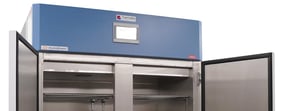
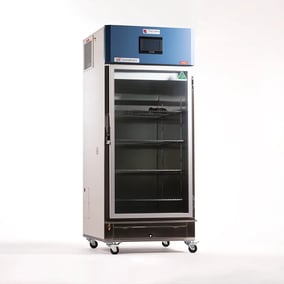
A UV test chamber compresses that process. Fluorescent UV testers such as the QUV expose specimens to UVA or UVB lamps alternating with condensing humidity, following ASTM G154 and ISO 4892-3. Xenon arc testers such as the Q-SUN reproduce full-spectrum sunlight including visible and infrared, which matters for lightfastness testing and photostability testing, and follow ASTM G155 and ISO 4892-2. Both approaches can reproduce months or years of harsh outdoor conditions in days or weeks.
One point worth being clear about from the start. Accelerated UV testing is comparative, not predictive. There is no universal factor that converts test hours into years of real world outdoor exposure. Run a known control alongside every new material and read the results as a ranking, and the data becomes reliable enough to make expensive decisions on.
Ten Returns on Investment From UV Resistance Testing
1. Avoid Catastrophes and Reduce Warranty Claims
A new or reformulated product can fail very quickly once it is exposed to sunlight and weather. The best protection is to test it before launch. Even well-established products fail when a production batch is made incorrectly or a component material arrives out of specification. What would it cost to recall a batch that fails in the field? What does a single warranty claim cost you, and how many would it take to outweigh a UV resistance test?
2. Cut Material Costs Without Losing Durability
Your product may be just as durable with more economical materials, a lower-cost pigment, the same pigment from a cheaper supplier, or less of an expensive UV stabiliser or absorber. A different polymer may reduce cost without compromising UV resistance. The only way to know is to test. How valuable would a one per cent saving on material costs be across a year of production? What about five per cent, or ten?
3. Enter New Markets With Data Behind You
Breaking into a new market means meeting customer expectations for durability. You can hope your product meets the mark, or you can test and know. Where durability falls short, UV exposure testing guides the development work: you reformulate, re-test, and repeat until the product clears the bar. What is the dollar value of a market you cannot currently enter?
4. Extend an Existing Product Range Safely
Small changes have large consequences under UV. A new colour, a different gloss level or a substituted filler can shift light stability considerably. Evaluating those variants through accelerated weathering lets you widen the range with confidence. What is it worth to add product options without putting the durability of the range at risk?
5. Improve Product Durability Without Adding Cost
Small material changes often produce large durability gains. Many manufacturers have significantly improved weathering performance with no increase in unit cost at all. Those combinations are only found by testing materials head to head. What is it worth to offer a demonstrably more durable product than the one you sell today?
6. Verify Your Suppliers' Claims
Every supplier believes their material offers the best balance of cost and durability, and each of them is probably right for some application. The question is whether their idea of good enough matches yours. A head to head UV resistance test, run in your own laboratory or through an independent facility such as Q-Lab, settles it with data rather than assertion.
7. Stay Ahead of Regulation
Environmental and safety regulation is steadily making proven raw materials more expensive or restricting them outright. Reformulating with compliant alternatives is no longer optional. Some substitutes will not affect durability, others will, and only testing separates the two. How much can you save by moving early to materials that sidestep costly regulation? How much could it cost if a new restriction forces you into a high-cost or low-durability alternative at short notice?
8. Expand Market Share and Outpace the Competition
Materials innovation is accelerating. Better and cheaper options appear constantly, and if you do not evaluate them, a competitor will. UV weathering data is what turns a promising new material into a product decision. What is a durability advantage over your nearest competitor worth, and what does it cost to be the one falling behind?
9. Protect and Enhance Your Reputation
The products you ship today shape your reputation for years. A premature field failure can follow a business for a long time, while products that hold up become quiet, permanent advertising for your quality. Few investments protect a brand as directly as durability testing. What is your good name worth?
10. Meet the Durability Standards Your Customers Specify
Some customers will not buy at all without UV resistance test data, and some specifications name the standard and the exposure duration outright. In those cases testing is not a return on investment calculation, it is the price of entry. Valid results from your own laboratory or an accredited testing facility are what unlock the order.

How to Put a Number on Your Own ROI
The arithmetic is usually simpler than it looks. Take the cost of one plausible failure, a recalled batch, a warranty program, a lost contract, and weigh it against the annual cost of a UV weathering tester or a contract testing account. For most manufacturers, avoiding a single incident covers the equipment several times over.
Then decide where the testing should sit. Occasional one-off work, a single qualification or a supplier dispute, is usually best handled through Q-Lab contract testing services. Once testing becomes continuous, every formulation change, every new colour, every incoming batch, an in-house UV test chamber is generally the cheaper and faster option, because the queue and the freight disappear and your team controls the schedule.
Test It, Rather Than Hope
UV resistance testing is one of the few investments that reduces risk, reduces cost and opens markets at the same time. As the exclusive distributor for Q-Lab in Australia and New Zealand, Thermoline supplies QUV accelerated weathering testers, Q-SUN xenon arc testers, corrosion testing chambers and outdoor exposure services, backed by local technical support, training and servicing.
If you are weighing up whether testing is worth it for your products, contact the Thermoline team on (02) 9604 3911 or get a quick quote today, and we will help you work through the numbers and the standards that apply to your application.
UV Resistance Testing FAQs
How long does a UV resistance test usually take?
Most accelerated weathering programs run between a few hundred and a few thousand hours, with specimens inspected at set intervals along the way rather than only at the end. Testers such as the QUV operate continuously, so a 1,000 hour exposure to UV radiation runs for roughly six weeks unattended. The right duration depends on the standard you are working to and on how long the product is expected to last in service.
Can I convert accelerated UV testing hours into years outdoors?
Not with any single conversion factor, and any supplier offering one should be treated with caution. Acceleration varies with material, climate, orientation and the failure mode you are measuring. The reliable approach is to expose a control material of known field performance alongside your candidates and compare them, which gives you a defensible ranking rather than a false precision.
What is the difference between ASTM G154 and ASTM G155?
ASTM G154 covers fluorescent UV lamp apparatus, which concentrates energy in the short-wave UV region where most polymer degradation begins, and is the practice behind QUV testing. ASTM G155 covers xenon arc apparatus, which reproduces the full solar spectrum including visible and infrared light, and is the practice behind Q-SUN testing. Fluorescent UV is generally the faster and more economical route for physical property loss, while xenon arc suits colour, fading and photostability work.
Which materials benefit most from UV resistance testing?
Any material with outdoor or high-light exposure. Polymers vary enormously: ASA, acrylic and polycarbonate hold up comparatively well, while ABS, polypropylene, PVC, polyester and PETG are far more sensitive to UV unless they are stabilised. Coatings, inks, sealants, adhesives, textiles, timber finishes, composites and packaging all commonly go through UV exposure testing before they are specified.
Do lightfastness testing and photostability testing use the same equipment?
They use the same family of equipment but different targets. Lightfastness testing measures colour change in textiles, inks, dyes and printed materials, and is usually run on a xenon arc tester because visible light drives much of the fading. Photostability testing follows a similar path for pharmaceuticals and packaging, where the concern is the chemical stability of the product rather than its appearance.
Do we need our own test chamber, or can we start with a contract laboratory?
Either works, and most manufacturers begin with contract testing. Sending samples to a facility such as Q-Lab gives you results without capital expenditure, which is ideal for a first qualification or a one-off dispute. The case for a UV weathering tester on site builds as testing becomes routine, when turnaround time starts limiting product development or when confidentiality around new formulations matters.